Support Specific Projects
Choose a project below to learn more and direct your support to the research that resonates with you. All donations go through the UH Foundation and are tax deductible.
Project 1: Fish Homes
Bio-mimicking fish habitats to enhance reef resilience and fisheries
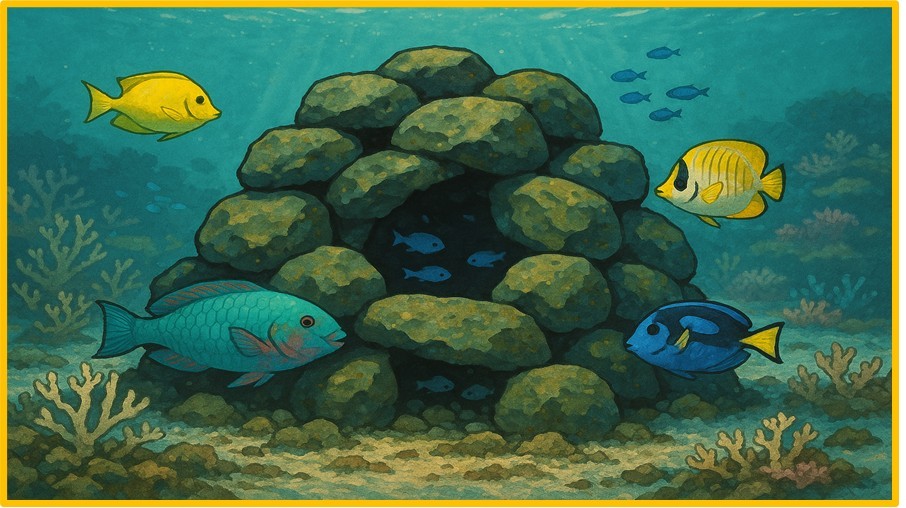
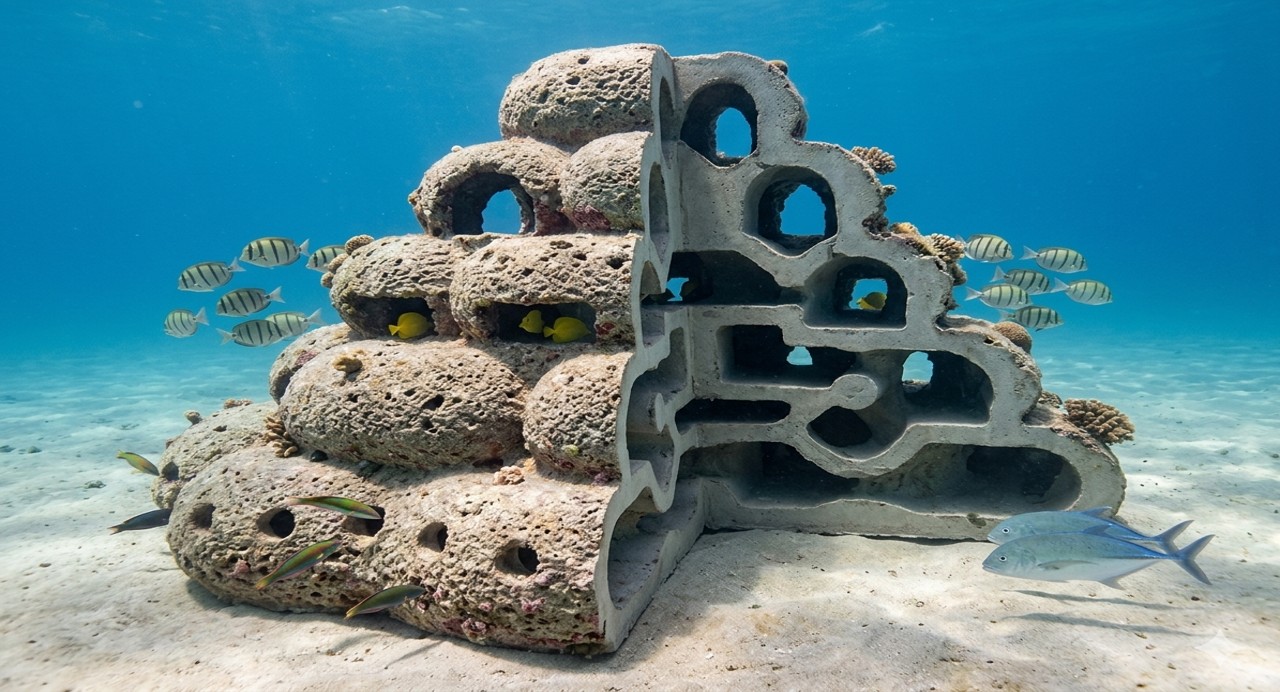
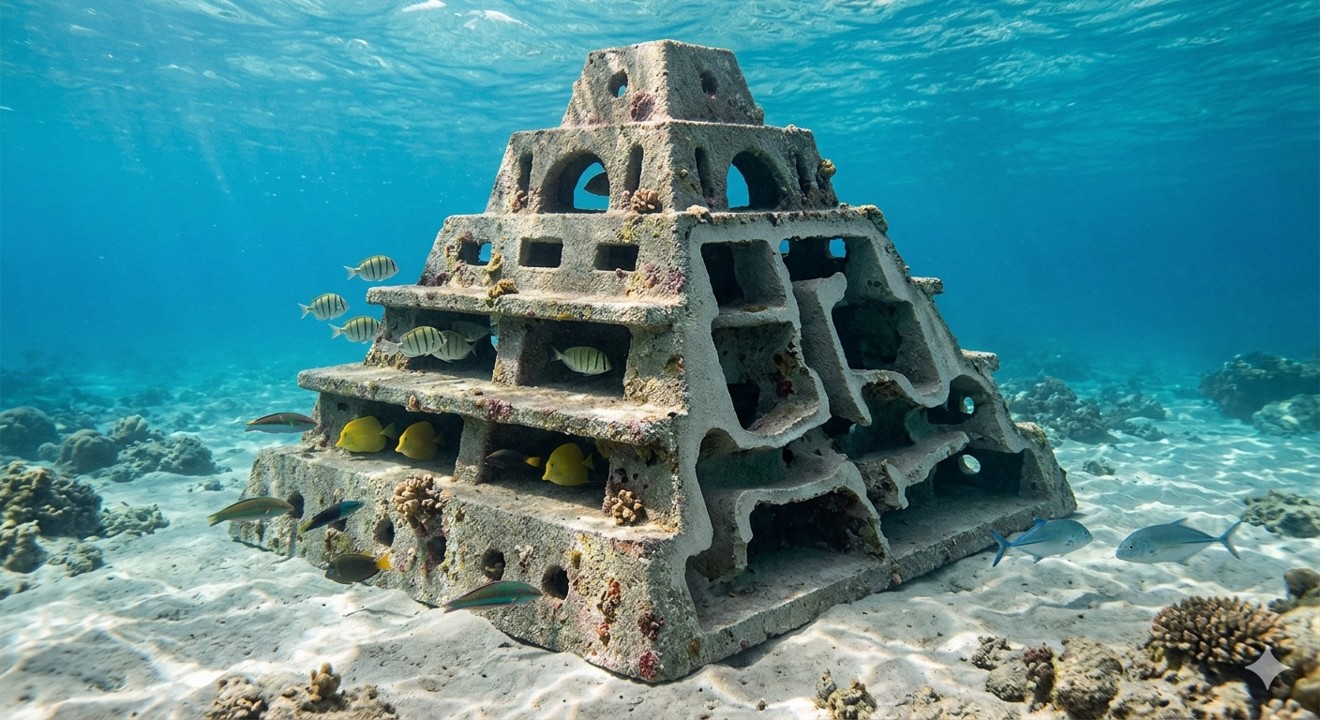
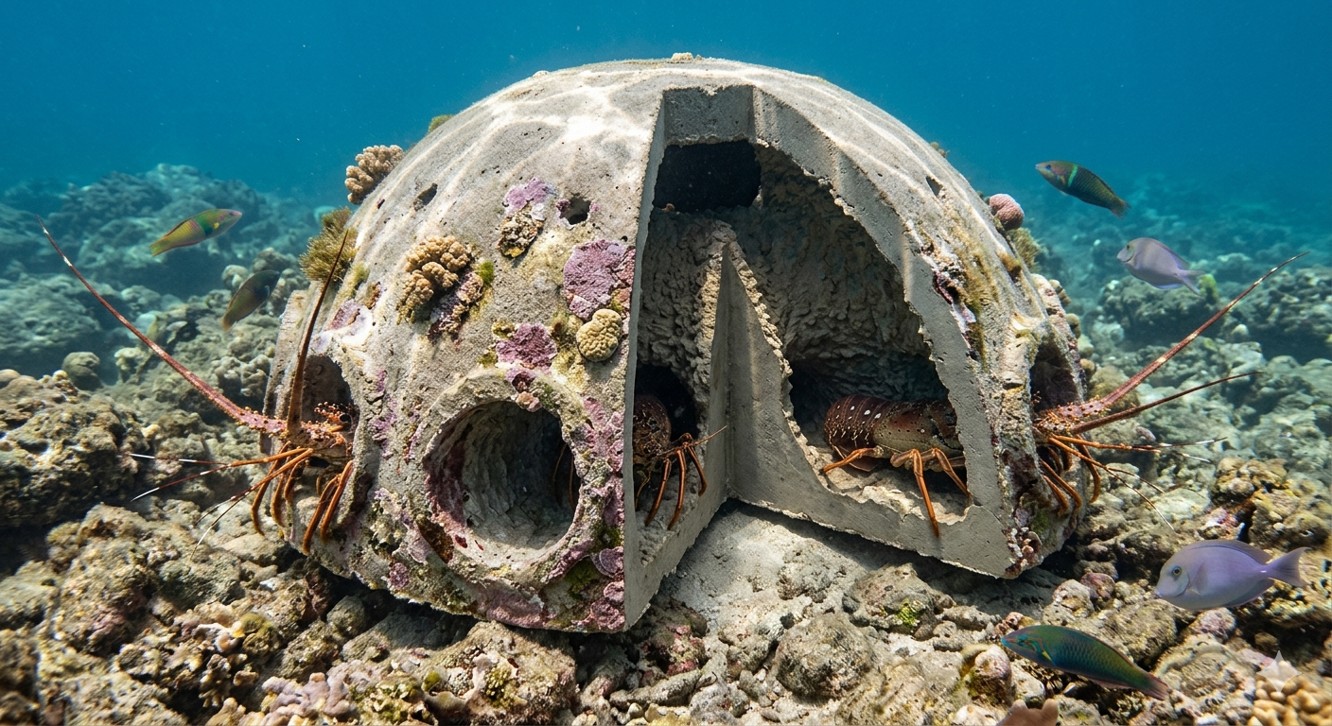
This project seeks to restore and substantially enhance coral reef fish abundance and biomass using native Hawaiian ecological knowledge and novel research to develop biomimicking, nature-based, artificial fish habitat structures.
As tropical coral reefs decline worldwide, coastal communities face growing risks from flooding, erosion, and storm damage, alongside the loss of fisheries that currently support more than 500 million people globally.
Leveraging recent advances in materials science, this project seeks to design reef-mimicking structures that maximize fish abundance, diversity, and biomass on degraded reefs. By integrating modern ecological and engineering science with imu, an ancient Hawaiian fishing practice which constructed coral-rubble fish houses to attract key resource fishes, this project aims to deliver a functional, culturally-grounded and scalable nature-based solution that will restore, protect and enhance fish biodiversity and sustainable fisheries yields for local communities.
Your donation supports:
- Researchers and students
- Habitat design and testing
- Community engagement and outreach
- On-reef deployment efforts
Project 2: Protecting the Protectors — Fish in Muddy Waters
Establishing run-off thresholds to safeguard reef fish and fisheries
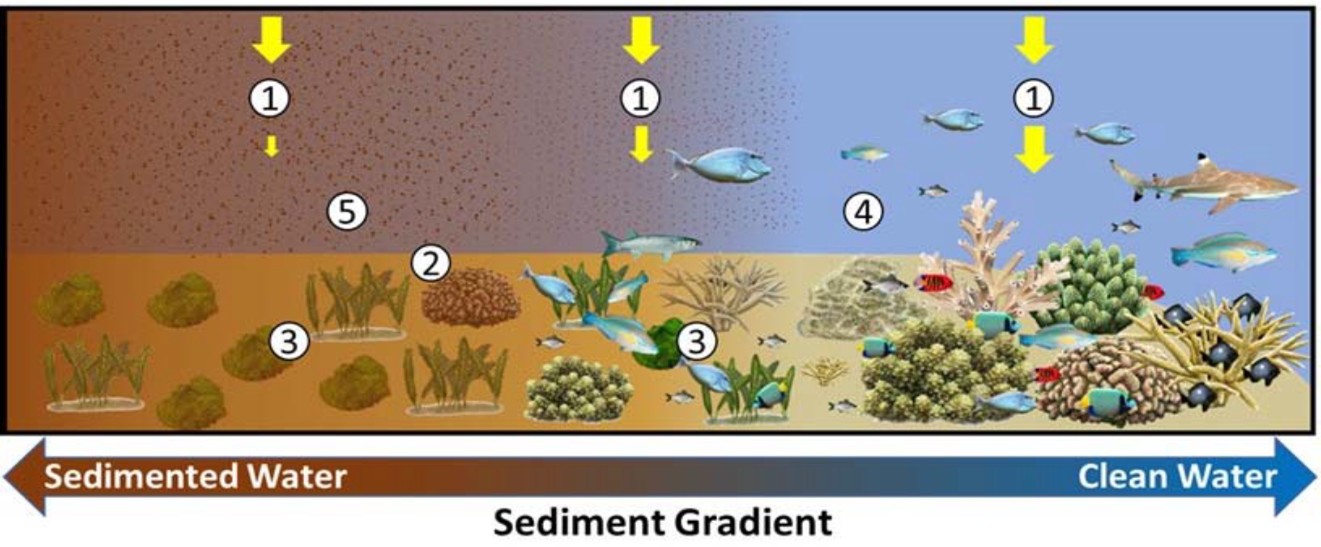
Nearshore tropical coral reefs are a source of vital ecosystem services to over one billion people worldwide, providing fisheries, tourism and shoreline protection. Yet, along with warming, coral reef organisms are threatened by excessive localized discharge of sediments and nutrients from coastal developments and poor land-use practices.
While sedimentation is natural, the levels of runoff found in human occupied areas are typically several hundred times higher than the natural baseline, grossly exceeding the natural conditions to which reef coral and fishes can withstand. These excess sediment and nutrient run-off are classified as primary causes of coral reef degradation worldwide, triggering a drastic loss of fish species, fish habitat and fisheries productivity.
Although classified as the second largest killer of coral reefs globally, the exact level of run-off that triggers loss of fish and fisheries productivity remains unknown. Luckily, run-off is also a localized threat that can be dealt with quickly and effectively at the community scale once accurate research information becomes available.
Situated in Hawaiʻi where many local communities depend on reef fisheries for survival, the Fish Resilience Program is leading the research aimed at minimizing the impacts of sediment run-off to reef fishes. Our research is explicitly designed to establish run-off tipping points (or threshold limits) as water quality targets for local communities and nation states. Our research outputs have already been implemented in several management strategies for the Great Barrier Reef, Australia, and we are now working to help enhance Hawaiian fish and fisheries.
Your donation supports:
- Researcher and student support
- Field and laboratory research
- Establishing water quality targets for communities and managers
Our research on sediment impacts has been featured in the Voice of the Sea documentary, “Clean Water, More Fish, Healthy Reef” (PBS Hawaiʻi, Season 13, Episode 2), produced by Hawaiʻi Sea Grant. Watch the documentary on YouTube →
Donate to Muddy Waters ResearchProject 3: Protecting the Protectors — Herbivorous Fishes to Restore Coral Reefs
Identifying thermally robust herbivorous fishes critical for coral reef survival
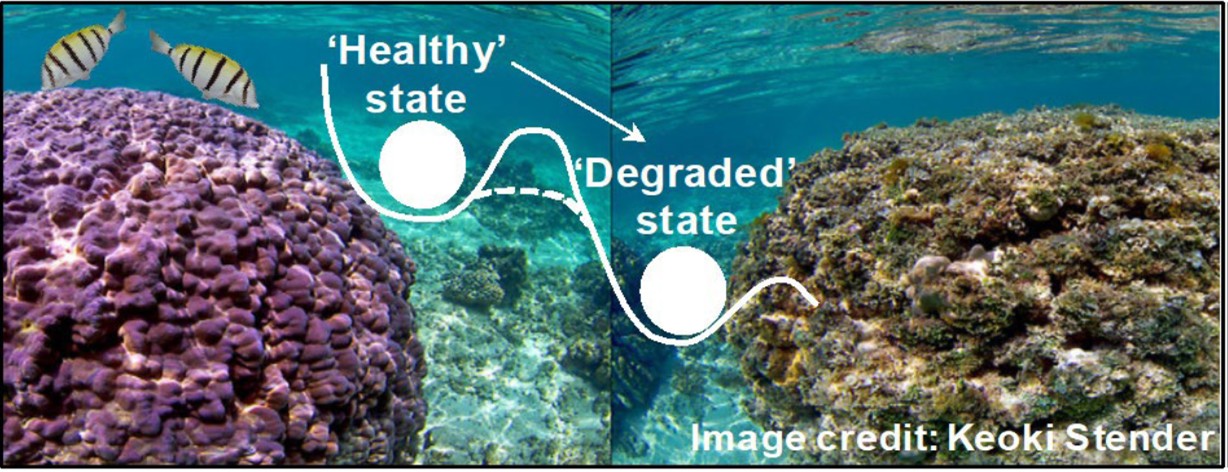
Rising ocean temperatures have increased the frequency and severity of coral bleaching events worldwide with devastating effects. Half of our world’s coral reefs have died in the past 30 years and >95% are projected to die by 2100 unless we can stem the decline.
Herbivorous coral reef fishes are critical for stemming this decline, as these fishes remove algae that overgrow and smother bleached coral while also facilitating the settlement, growth and survival of new coral recruits. The protection of herbivorous coral reef fishes is an essential management tool worldwide to increase the health, resilience and survival of coral reef ecosystems.
The strategy of protecting herbivorous fishes to maintain healthy coral reefs only works if these fishes are robust to the same conditions that bleach and kill coral. Yet, this premise has never been tested. Recent observations during bleaching events have documented sharp declines of >50% in the abundance of numerous reef fishes, including critical herbivores. These data suggest that heating poses a major threat — but also that some species may be relatively robust (i.e. winners).
Using a range of state-of-the-art techniques, our research is explicitly designed to establish temperature tipping points for critical species, and develop outcome projections. Working across the globe, the Fish Resilience Program is actively working with educators, managers and communities to help identify and protect thermally tolerant reef fishes for future generations.
Two-tiered research approach:
- Tier 1: Species or location-specific evaluations (e.g. the Hawaiian Yellow Tang)
- Tier 2: Ecosystem or regional-scale modeling and projections
Project 4: Enhancing Critical Research Infrastructure
State-of-the-art water quality control systems for the Fish Resilience Lab
Located at the Hawaiʻi Institute of Marine Biology (HIMB) on the island of Moku o Loʻe (Coconut Island) in Kāneʻohe Bay, the Fish Resilience Program provides knowledge, projections and tools to improve management and conservation of threatened nearshore species and enhance fisheries and food security.
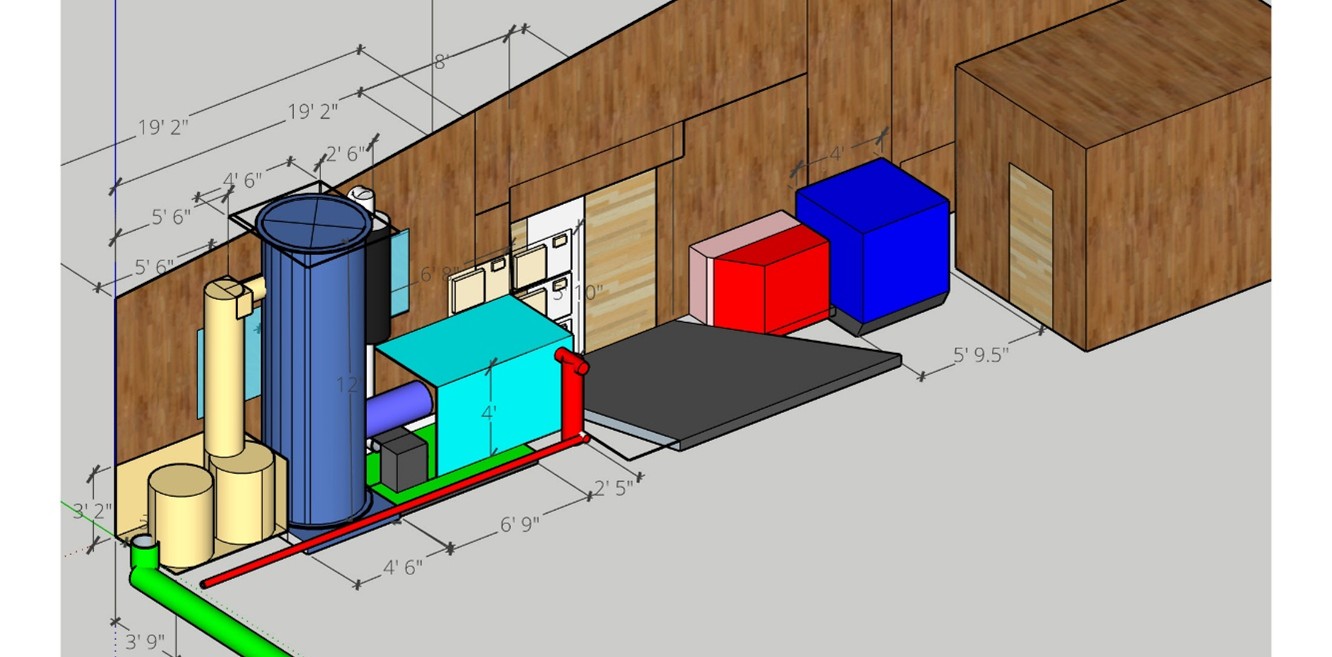
However, in order to provide precise evaluations of tolerance and exposure limits, the research is reliant on controlled water quality conditions in the laboratory. The current water supply system at HIMB consists of a flow-through delivery system, which passes water directly from Kāneʻohe Bay through animal holding tanks and back. In recent years, Kāneʻohe Bay (and most water around Hawaiʻi) is increasingly experiencing periods of ocean heatwaves, as well as pulses of excessive nutrients and sewage.
These declines in water quality directly interfere with our ability to research impacts of clean versus specific states of degraded water quality.
Infrastructure upgrades include:
- Particle-filtration sand filters to remove physical pollutants
- Degassing system to remove gaseous pollutants
- Biofilter sump to remove organic pollutants
- Post-filtration lab supply water line with supply pump
- Water cooling/heating system for consistent temperatures